
September 8, 2026 · Ultra Pest Control
Wolf Spiders in the House? What to Know This Fall
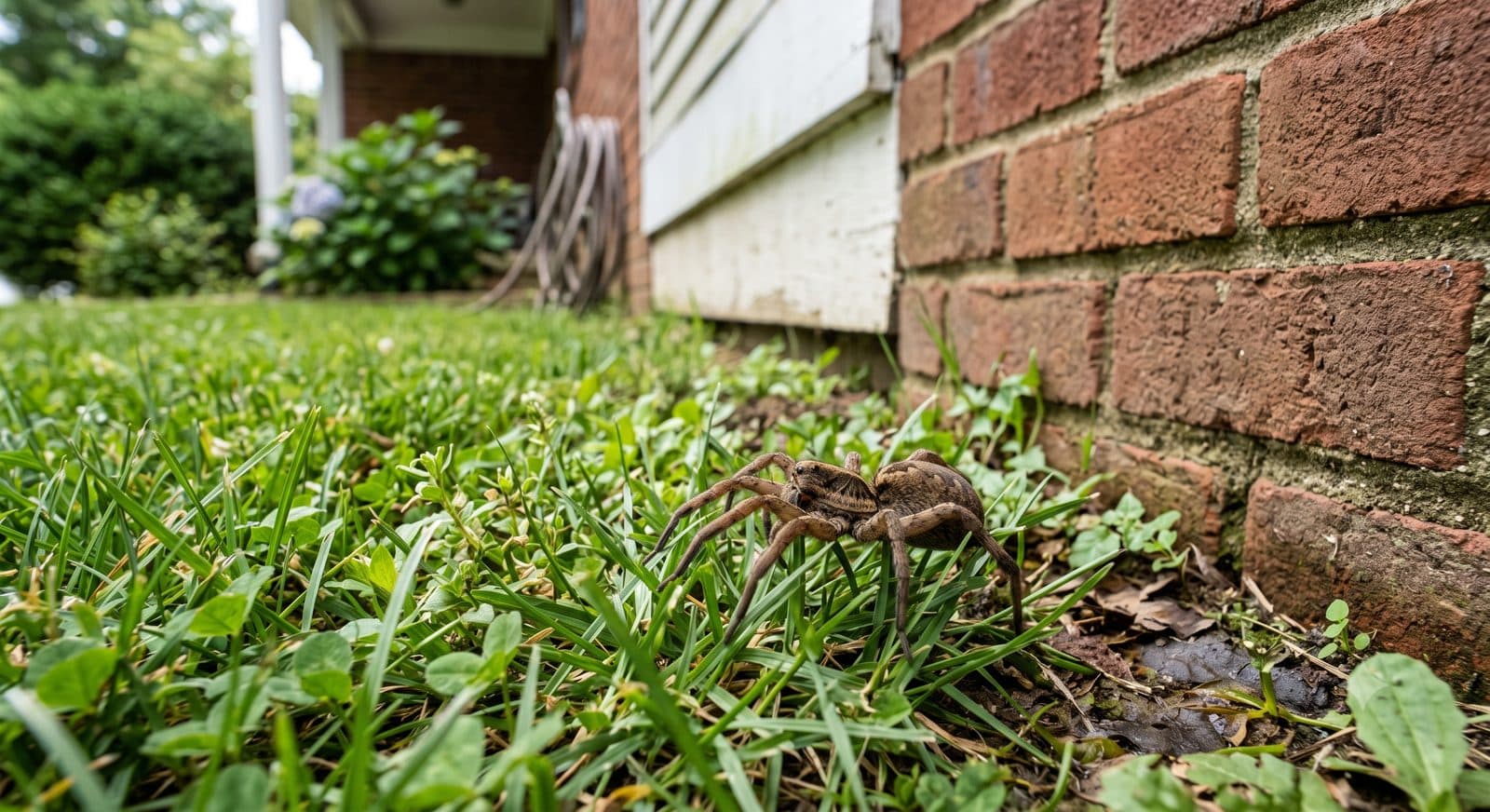
It's September across the Tri-State, and the big spiders are coming inside. Homeowners in Huntington, Ashland, and Ironton have been calling us about them for weeks: wolf spiders, dark fishing spiders, and other large wanderers that don't spin webs and don't stay in one spot. They move fast, they're hard to miss, and they show up in the middle of the living room floor at the worst possible moment. Here's what they're doing in your house and what keeps them out.
Why spiders come inside in September
Spiders don't wait for the first frost to move in. As overnight temperatures drop into the 50s, the insects they eat start looking for warmer places, and the spiders follow the food. September is also mating season for many of these species, which sends male spiders wandering in search of a female. A male wolf spider can cover a lot of ground in one night, and your foundation, your porch, and the gap under your door are all part of his route.
They aren't setting up house in your hallway. They're hunting. These are wanderers that spend the summer in tall grass, leaf litter, and ground cover. When that habitat turns cold and wet, they look for dry shelter, and your garage, basement, and crawlspace qualify.
Meet the spiders you're seeing
Wolf spiders are the ones people describe as big, hairy, and fast. They range from gray to dark brown, often with lighter stripes, and they're nocturnal hunters that chase down prey instead of catching it in a web. A female wolf spider carries her egg sac behind her and later carries her spiderlings on her back, which is why you'll sometimes see a large spider covered in tiny babies. It looks worse than it is.
Dark fishing spiders are the other large spider turning up in Tri-State homes this time of year. They're brownish gray with darker markings, and at a glance they're easy to mistake for wolf spiders. Despite the name, the dark fishing spider doesn't need a creek or pond nearby. It's the member of the fishing spider family most likely to wander away from water, and in the fall it shows up in garages, basements, and ground-floor rooms. They're quick, and when startled they head straight for the nearest dark corner.
None of the spiders we're talking about are aggressive toward people. Bites happen only when a spider gets trapped against skin, like inside a shoe or a sleeve, and for these species a bite is not a serious medical event in our area. They'd rather run. The real reasons to manage them are the webs and egg sacs they leave behind, and the fact that a lot of spiders usually means a lot of the insects they eat.
Seven ways to make your home less spider-friendly
1. Keep the grass cut and the weeds knocked down. Tall grass and overgrown ground cover are prime spider hunting ground. A weekly mow through September takes it away.
2. Clear a strip around the foundation. Leaf piles, brush, lumber, and firewood stacked against the house give spiders shelter and a direct path inside. Keep woodpiles away from the siding.
3. Trim anything that touches the house. Shrubs and tree branches that rest against the siding or the roof are bridges straight to your attic and walls.
4. Declutter the garage, basement, and attic. Cardboard boxes are a favorite hiding spot for spiders and for the insects they eat. Move stored items into plastic totes with tight lids, keep them off the floor, and clear out boxes you haven't opened in years.
5. Vacuum like it's your job. Corners, baseboards, window sills, under furniture, closets. Knock down webs as you spot them and take the vacuum bag or canister outside right after, since egg sacs can survive inside the vacuum.
6. Block the doorways. Install or replace door sweeps, repair window screens, and seal gaps where pipes and cables enter the house. Most wandering spiders come in at ground level.
7. Rethink your porch light. Outdoor lights draw flying insects all night, and spiders show up to eat them. Use a yellow bug bulb or leave the light off when you don't need it, and you cut off the food supply at the door.
When it's time to call us
If you're finding a spider now and then, the list above will take care of most of it. If you're finding them weekly, or they keep coming back no matter how much you clean, there's usually a bigger insect population feeding them, and the fix is on the outside of the house, not the inside.
An exterior perimeter treatment does two jobs: it cuts the insect population spiders feed on, and it treats the sheltered spots where spiders hide and enter. Our standard perimeter treatment starts around $225 with a 60-day warranty, and right now, through September 30, our Fall Special includes wasps and spiders at no extra cost with an extended 90-day warranty.
We're family-owned, and there's no call center between you and a schedule. When you call (304) 521-1174 in West Virginia or (606) 385-2056 in Kentucky, a person answers. Free estimates are free for a reason: get yours here.
We're the local exterminator for Huntington, WV, Ashland, KY, and Ironton, OH, and we cover 14 communities across the tri-state.
FAQ
Are wolf spiders dangerous?
No. They can bite if trapped against skin, and the bite can sting like a bee sting for a short time, but wolf spiders are not aggressive and their bites are not a serious medical concern in our area.
Why do I keep finding big spiders in September and October?
Cooler nights push their insect food indoors, and mating season sends males wandering. Your home is warm, dry, and full of hiding spots, so it looks like a great place to spend the fall.
Do the spiders die off in winter on their own?
Most outdoor spiders die or go dormant at the first hard frost, but spiders that make it inside can live through the winter, and females can lay egg sacs that hatch in spring. Treating the perimeter and clearing harborage in the fall stops the cycle before it starts.
How much does spider treatment cost?
A standard exterior perimeter treatment starts around $225 with a 60-day warranty. Through September 30, the Fall Special includes wasps and spiders with an extended 90-day warranty. Free estimates are available any time.
Dealing with a pest problem in the Tri-State area?