
October 4, 2026 · Ultra Pest Control
Why Rodents Move Into Homes in Fall and Winter
Rodent calls climb every fall, and the reason is weather, not luck. Seasonal industry service data points to a 40% to 50% jump in rodent problems in homes during the autumn and winter months, and falling temperatures are the trigger. Once the low drops below 50F for a night or two, mice and rats start looking for ways into homes in Huntington, WV, Barboursville, Ashland, KY, and Ironton, OH. Those homes were quiet all summer.
Why 50 degrees is the number that matters
A mouse or a rat sheds heat quickly, because it has a lot of skin and not much body mass. A squirrel can put on fat and stay in a den for days at a time, but a mouse cannot. Once the air outside stays below 50F, rodents are under real stress, They head for human structures, where they can find shelter, warmth, and food.
That last part matters. Rodents do not hibernate, and mice and rats stay active all winter. A problem you notice in October is still a problem in January if nothing changes.
What shifts outside in September and October
Three things happen around the same time. Fields and gardens get cut back, and that strips out the tall cover rodents use to move around safely. Natural food thins out as seeds, nuts, and insects go away. Then the first cold nights arrive, and together those shifts push rodents off open ground and toward edges: fence lines, woodpiles, brush piles, barns, garages, and the plantings around your house.
Fall is also when young rodents leave to find their own space. New animals move through your neighborhood as the weather turns. Your home is not the only option they are weighing. It is the warmest one.
How a rodent decides your house is the one
Rodents read a house the way you read a map. Heat leaking from a foundation, a dryer vent, or the gap under a door says shelter is close. They also follow scent trails left by other rodents. That is why a house that had mice three winters ago tends to get them again.
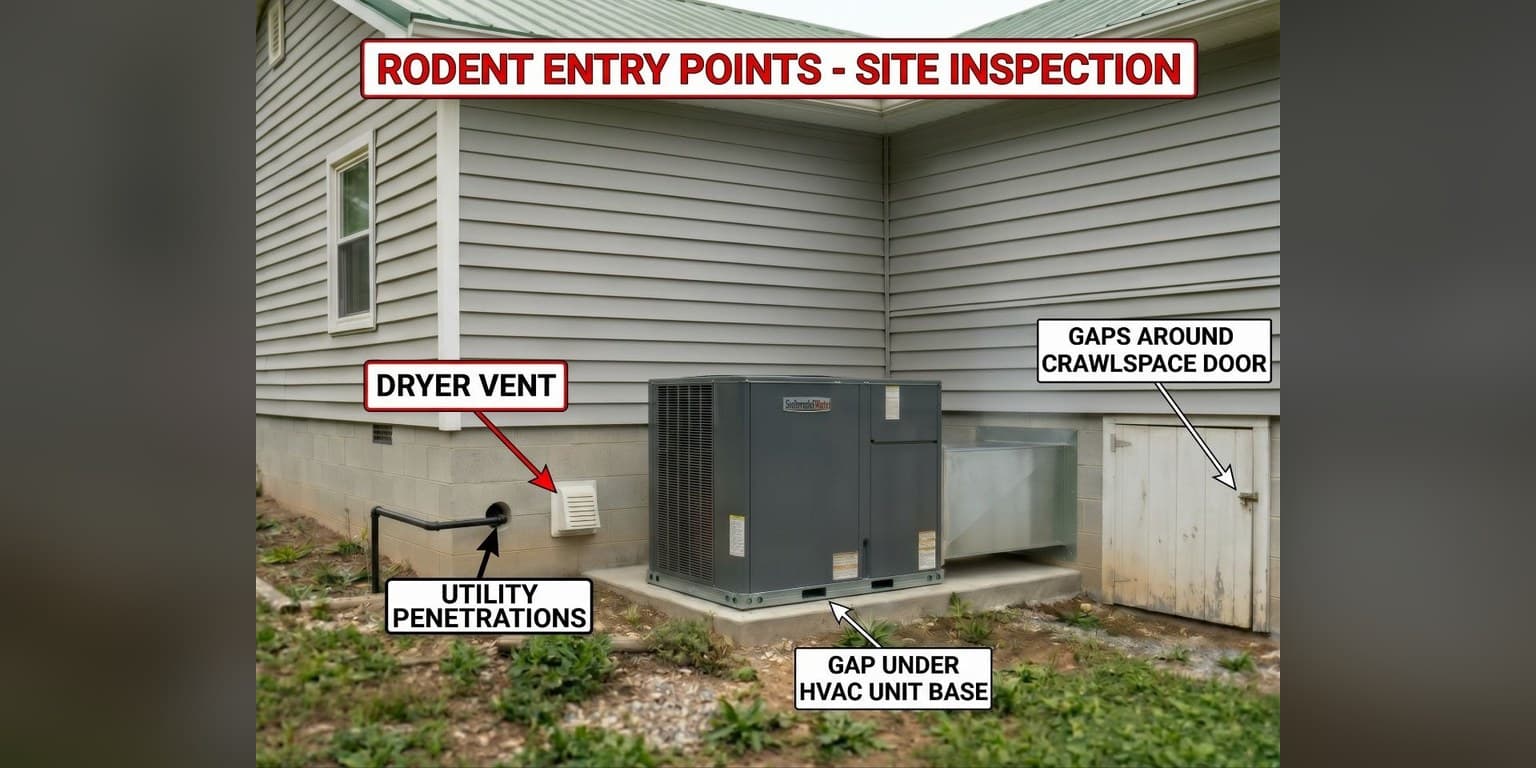
Mice and rats keep a shoulder against a wall instead of crossing open floor, They move along foundations, wires, and pipes. A gap the width of a pencil is an open door. A furnace line or a cable entry gives them a runway straight inside.
The three things they need, and where your home provides them
- Warmth. Attics, crawlspaces, wall voids, basements, and the space above a garage ceiling all stay warmer than the outdoors. That holds even in a mild winter.
- Shelter. Insulation, cardboard, and stored fabric become nesting material within days.
- Food and water. Bird seed, pet food, pantry goods, cooking grease, and unsealed trash all count. A mouse gets much of the water it needs from what it eats, and a small leak covers the rest.
Take away any one of those and the pressure eases. Take away all three and a rodent keeps moving down the street.
Why the problem grows after they are inside
A mouse can start breeding at around two months old, and litters of five or six follow several times over a season. A small group that moves in during October can be a serious one by February. The damage adds up in the same places: gnawed wiring and pipes, soiled insulation, droppings and urine behind cabinets, and the smell that settles into a well-used runway.
Rodent problems also tend to repeat in the same house. The scent trails stay, and next fall's rodents find them. That is the pattern behind most of the repeat calls we get in January and February. These come from people who first heard scratching back in the fall.
What commercial properties run into
The same shift shows up in restaurants, apartment buildings, warehouses, schools, and offices. Shared walls and mechanical rooms stay warm, and food areas draw rodents from a wider radius. One sighting matters more in a commercial kitchen than it does in a home garage. For a building manager, fall is the right time to book a walkthrough, before the walls get cold and the traffic moves inside.
What an inspection actually finds
Most people can spot the obvious gaps once they know what to look for. The entry points that matter are the ones you cannot see from the ground. Look for wires and pipes behind siding, the corner where a sill plate meets the foundation, the gap at a soffit, and a crawlspace door that does not close flush.
A visit covers the outside and the inside, and we treat where rodents are moving rather than where we guess they are. For most homes that means sealing what we can seal and setting equipment where the traffic is. We also tell you what to watch after we leave.
FAQ
Why do rodents come inside when the weather turns? Cold puts them under stress. They need stable shelter, warmth, and food, and heated buildings provide all three. Once it stays below 50F outside, moving indoors is the better bet for them.
What temperature sends rodents in? We see call volume climb once it stays below 50F outside. A single cold night is not enough, and it is the run of cold nights that changes the pattern.
Do mice and rats both come in for the winter? Yes, and mice are the most frequent call, including house mice and the field mice common around here. Rats follow the same seasonal logic and turn up more in commercial buildings and older neighborhoods with alleys, sewers, and utility lines.
Is a winter problem worse than a fall one? It usually is. Once rodents are inside and breeding, the group grows while the cold keeps them there. What you find in February started as a much smaller number in October.
Can I do the sealing work myself? Much of it, yes. Our post on keeping mice out before winter walks through the checklist. What most people cannot do is find the hidden entry points or clear out a group that is already there.
Call today to get on our schedule.
Dealing with a pest problem in the Tri-State area?