
August 28, 2026 · Ultra Pest Control
How to Inspect Your Home for Bed Bugs

Our bed bug calls have picked up over the last few days, and most start the same way. A homeowner finds a few bites or a dark spot on the sheets and isn't sure what to do next. Bed bugs aren't a sign of a dirty home. They ride in on luggage, used furniture, and secondhand items. A careful inspection catches them early, and early is easier to handle. Here's how to check, and what to do if you find them.
What bed bugs look like
Adult bed bugs are small, about the size of an apple seed, flat, and reddish brown. After a blood meal they swell and turn deeper red. People often mistake them for ticks or small roaches. The younger stage, called nymphs, is lighter in color and very small. The eggs are pinhead-sized, pale white, and tucked into cracks and seams near the hiding spots.
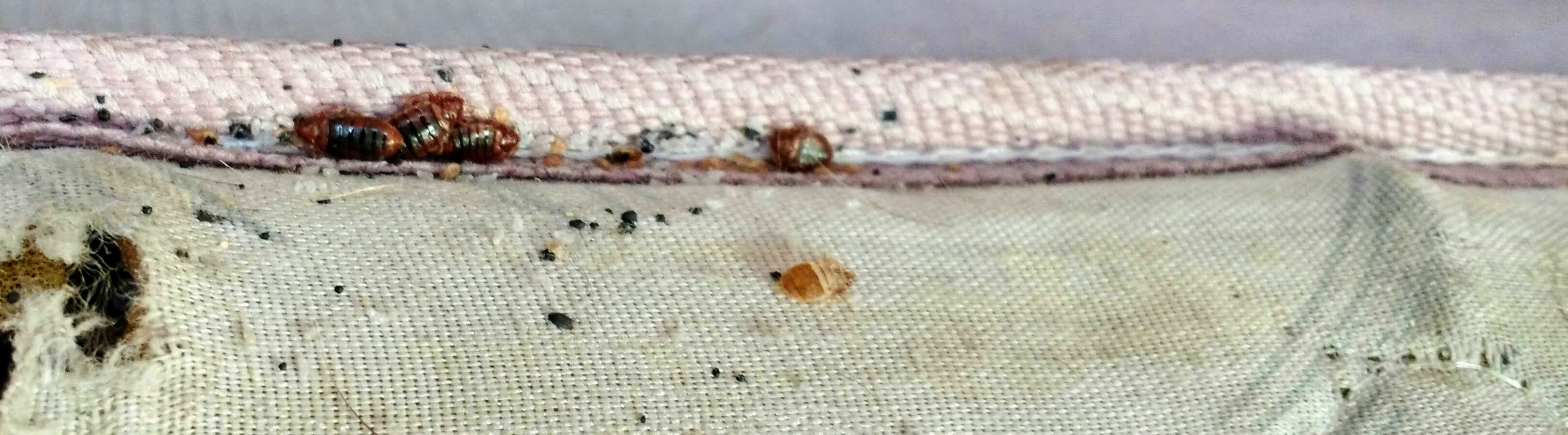
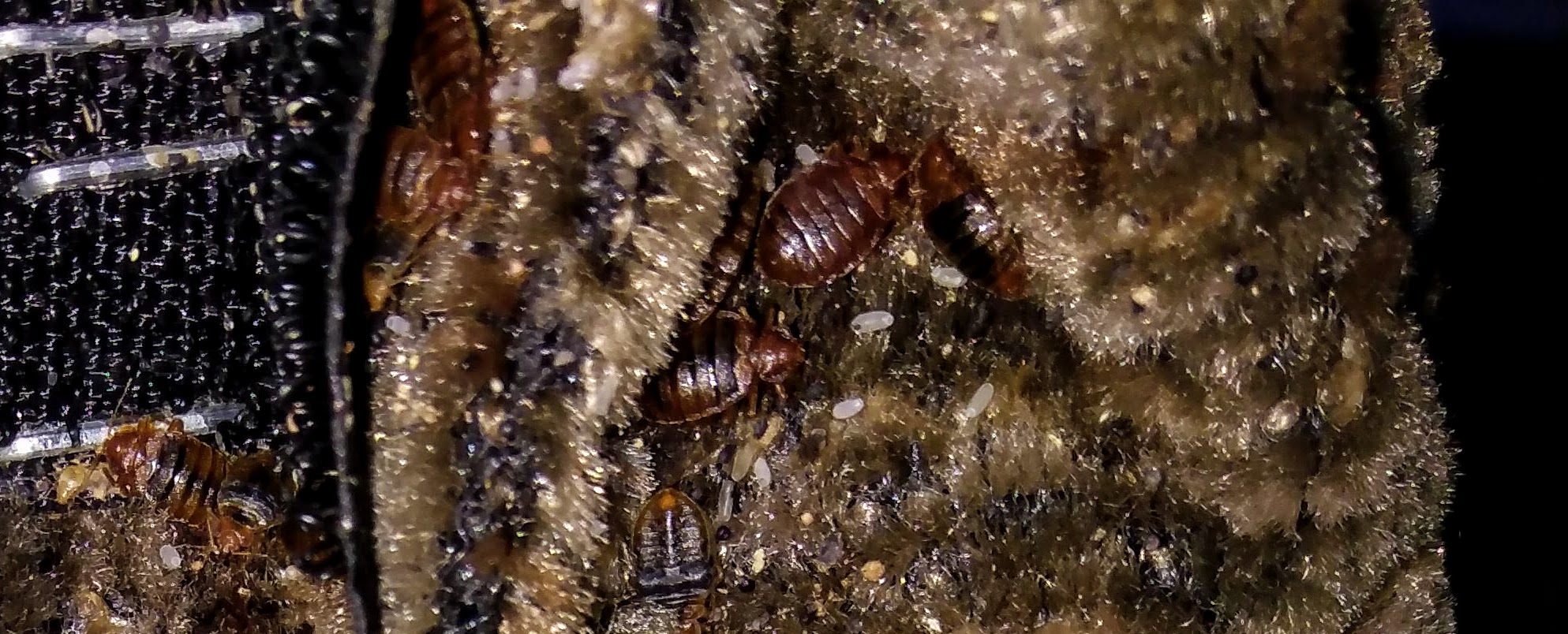
Signs to look for besides the bugs themselves
Most people never see a live bed bug at first. They find the signs:
- Dark spots on sheets, mattress seams, and furniture. These are bed bug feces, digested blood, and they smear slightly if you touch them.
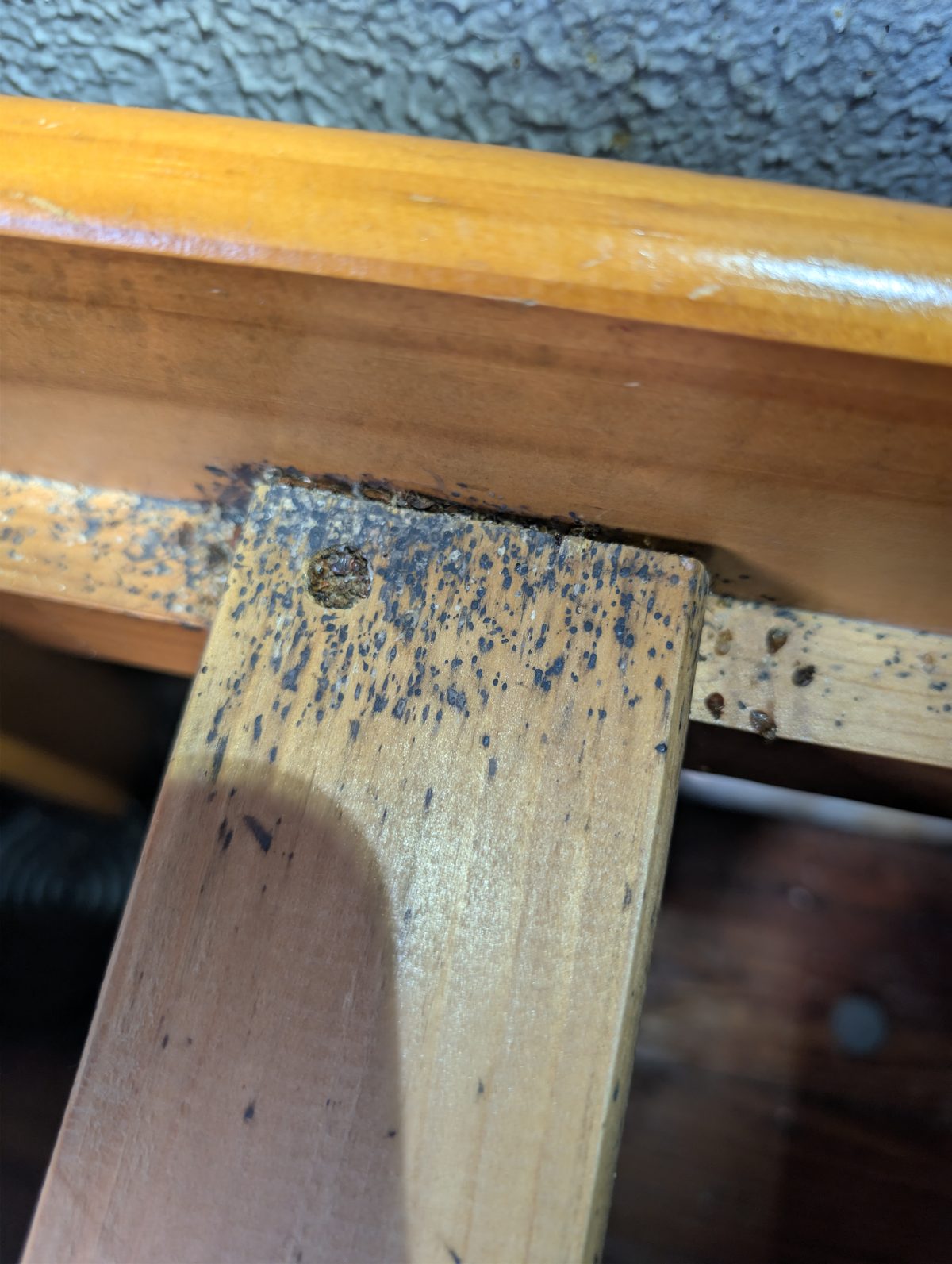
- Blood spots on sheets, left when a bug gets squished during the night.
- Pale shed skins. Bed bugs molt five times before adulthood and leave the empty shells behind.
- Bites, often in a line or cluster on exposed skin.
- A musty, sweet smell in a heavier infestation.
How to inspect your home for bed bugs
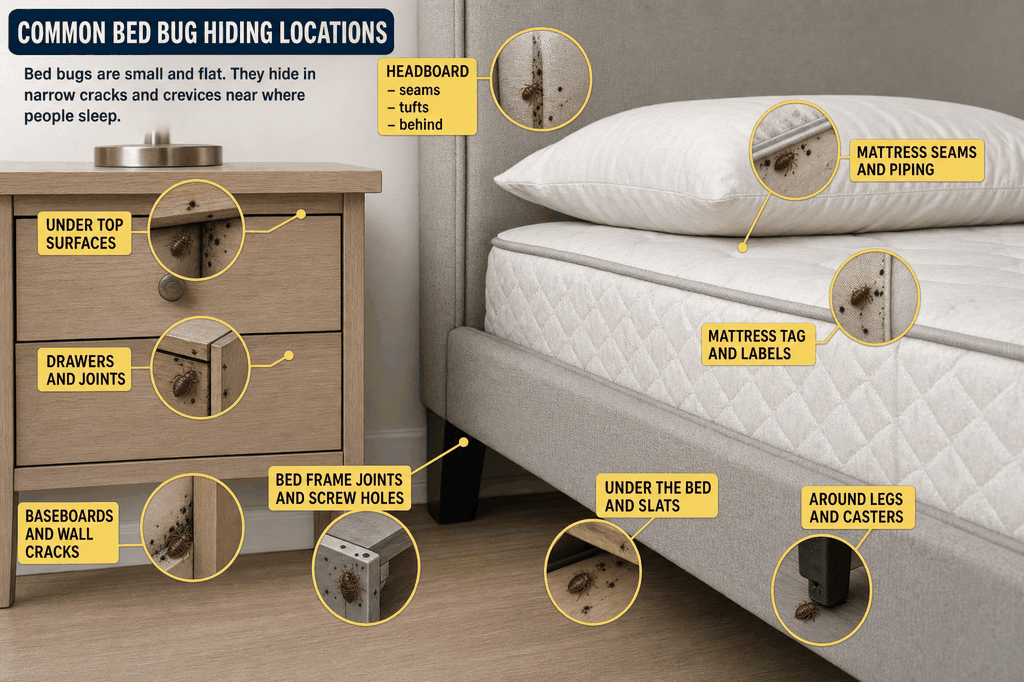
A thorough check takes about 15 minutes per bedroom. Grab a bright flashlight and something flat, like a credit card, to slide into narrow cracks. Go slowly and check every seam, not just the top of the bed.
Start at the bed and work outward:
- Mattress seams, tufts, and tags. Run the flashlight along every seam and lift the edge of the piping. Check the label tags too.
- Box spring. A favorite hiding spot. Check the seams and the fabric on the underside.
- Headboard and bed frame. Check the seams, joints, and screw holes, plus behind the headboard if it's mounted to the wall. Don't skip the legs and casters.
- Under the bed. Pull everything out and check the slats and the floor.
- Nightstands and dressers. Open the drawers and check the joints and corners, plus the top surfaces.
- Baseboards, wall cracks, and outlets. Slide the card along baseboard gaps. Outlet covers and cable holes near the bed are common spots.
- Couches and chairs. If anyone naps on the sofa, check the seams, the cushions, and the joints underneath.
If you've been traveling, check your suitcase before it comes into the bedroom, and wash everything on hot when you get home.
You found bed bugs. Now what?
First, don't panic, and don't start spraying. Here's what helps right away:
- Vacuum thoroughly. Go over the mattress seams, box spring, baseboards, and carpet near the bed. Empty the canister into a sealed trash bag and put it in an outdoor can.
- Wash and dry bedding on high heat. Sheets, blankets, pillowcases, and clothes that touched the bed go in hot water, then dry on the highest setting. The heat is what kills the bugs and eggs.
- Get mattress and box spring encasements. A zippered encasement traps bugs already on the mattress and keeps new ones out. Leave it on for a year.
- Don't move furniture between rooms. That just spreads the problem. Keep everything in place until treatment happens.
- Don't throw away the mattress yet. In most cases it can be saved. Talk to a professional first.
Why store-bought sprays don't work
Bed bugs hide in cracks too narrow for a spray to reach, and many are resistant to over-the-counter pesticides. A store spray can kill the bugs it touches and scatter the rest deeper into the walls and other rooms. Many of these products also aren't labeled for use where people sleep.
And absolutely no bug bombs or foggers
This is the one we ask every homeowner not to do. Bug bombs, also called foggers, are the wrong tool for bed bugs, and they can make the problem worse.
- They can't reach the hiding spots. The mist settles on open surfaces, but bed bugs live inside seams, cracks, and wall voids, where the fog never goes.
- They scatter the infestation. The mist and air movement drive bed bugs deeper into the walls and other rooms. In an apartment or duplex, they can push them into a neighbor's unit.
- They don't kill the eggs. Eggs are protected inside seams and hatch a couple of weeks later, after the fog has settled.
- They're a safety hazard. A fogger releases flammable aerosol. With pilot lights or an open flame, that's a fire risk, and the residue settles on surfaces your family touches.
What professional bed bug treatment looks like
When you call us, the first step is a real inspection. We confirm the bed bugs and count every bedroom and living and family room in the home, because bed bugs travel through walls, outlets, and furniture. Treating only the room where you saw them rarely solves the problem, so we treat all of those rooms.
The initial treatment targets mattresses, furniture, baseboards, and the hiding spots above, then we come back for one follow-up visit about 30 days later to catch anything that hatched. Every treatment includes a 90-day warranty. If they come back in that window, we do too, at no cost.
Bed bug treatment is priced per room, usually between $215 and $300, depending on how many rooms your home has. A free estimate gives you the exact number for your house. Get yours here.
We're family-owned and we don't run a call center. When you call (304) 521-1174 or (606) 385-2056, you get a person who can actually schedule you. We're the local exterminator for Huntington, WV, Ashland, KY, and Ironton, OH, covering 14 communities across the tri-state.
FAQ
Do I need to throw away my mattress if I have bed bugs?
Usually not. A properly treated mattress, especially with a protective encasement afterward, can often be kept. Replacing furniture without treating the room doesn't solve the problem.
Do you treat only the room where I saw bed bugs?
No. Every bedroom and living and family room in the home is treated, not just the rooms where you've seen activity. Bed bugs travel through walls, outlets, and furniture, so treating one room rarely solves the problem.
What if bed bugs come back after treatment?
Every treatment includes a follow-up visit 30 days after the initial treatment and a 90-day warranty. If you want ongoing protection beyond that, we offer a quarterly plan under a 12-month agreement.
How do bed bugs get into a home?
They hitchhike. They ride in on luggage, bags, used furniture, and secondhand clothing. Check secondhand items and wash travel clothes on high heat.
Dealing with a pest problem in the Tri-State area?